
Headlines


Contact us
Address:MegaRock Railway Equipment Co.,Ltd.
JinYouLi Creative Park,
JianShe NanLu #81,
ChengHua District,
Chengdu City,
Sichuan
Province,
610051,
PR China
Email:info@megarockgroup.com
Tel:+86 (028) 6250 8785
Headlines > News
Suifenhe in the Pulse of History: Century Symphony and New Chapter of Border
City on Rails
Source: Xinhua News Agency |
May 14, 2025
In the southeastern corner of Heilongjiang Province, bordering Russia's Primorsky Krai,
Suifenhe gleams like a precious pearl set along the national boundary. With its unique
geographic position along 27 kilometers of borderline, it stands as China's sole overland
trade gateway to the Sea of Japan. Here, railways and highways stretch like iron arteries
deep into Russian territory. The third-generation border gate, with its dual eight-lane
passage running north and south, and the thunderous opening of over 3,000 China-Europe
freight trains, echo with the powerful pulse of Sino-Russian commerce.
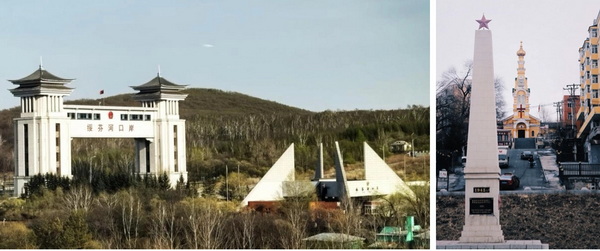
The border gate stands majestic and proud, its metal national emblem gleaming solemnly in the sunlight—a symbol of sovereignty and a window of openness. The steel framework of the old railway bridge glows with an amber hue, while rust-red stains on blackened sleepers bear witness to the rings of time. Wildflowers blooming quietly between the rails harmonize with the golden spires of distant Orthodox churches, composing a painting where history and reality intertwine—steel rails' cold hardness coexists with wildflowers' tender softness, the whistle of the Chinese Eastern Railway overlapping with the ringing bells of merchant caravans from a century past. Embedded in the gaps between sleepers are the deep and fading footprints of traders and travelers, the secret history of the Red transportation line, and the fading shadows of the Asia Express passing through.
Following the blue-brick roads of Peace Street, Russian nesting doll-shaped cultural shops scatter exotic charm around the corners of historic buildings. Russian architectural complexes, Russian-signposted shops, authentic Russian cuisine, and Russian commodity markets create an atmosphere thick with Sino-Russian cultural fusion.
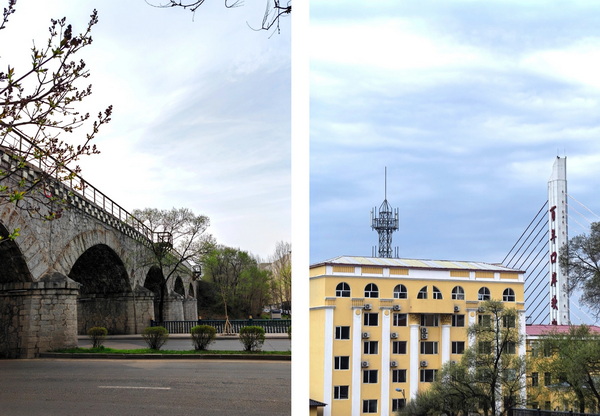
Suifenhe is home to 16 themed museums spanning the history of the Chinese Eastern Railway, border trade, and revolutionary culture. Stepping into the Railway Memory Hall, visitors can touch the weathered carriages of the Asia Express and observe ancient brass signal lights. As dusk settles, the century-weathered railway station appears hazily before one's eyes. Gazing around this historic station that has weathered centuries of change, one seems to glimpse the bustling scenes of old—throngs of people, streams of cargo and trains. Time has crystallized here, history has flowed through here, and Suifenhe, this "city on steel rails," has witnessed the transformations of an era and the footsteps of development.
As morning light illuminates the border gate once again, Suifenhe has transformed from a historic waystation into an open hub. Cross-border e-commerce packages flow through intelligent sorting systems. In the sports complex of the Sino-Russian Sports Park, 230 silver-haired members of a rhythmic gymnastics ball ensemble toss their colorful balls like rosy clouds—orange arcs sweep across the ceiling like spring swallows cutting through water, or like starlight dancing in orbit, weaving a dynamic brocade for the border city in May. What these national silver-haired dancers write with their colorful balls is not merely the brilliance of their later years, but also the symphony of synchronization between elderly vitality and urban development in this "city on steel rails," orchestrated through sporting events as the medium.
From the centennial winds and clouds inscribed on railway sleepers to the temporal arc traced by rhythmic gymnasts' balls, Suifenhe perpetually strikes the chord of integrated development with its open stance, positioned at the intersection of history and future—steel rails extending toward distant horizons, bearing the weight of time while also cradling the sunrise of a new era.
The border gate stands majestic and proud, its metal national emblem gleaming solemnly in the sunlight—a symbol of sovereignty and a window of openness. The steel framework of the old railway bridge glows with an amber hue, while rust-red stains on blackened sleepers bear witness to the rings of time. Wildflowers blooming quietly between the rails harmonize with the golden spires of distant Orthodox churches, composing a painting where history and reality intertwine—steel rails' cold hardness coexists with wildflowers' tender softness, the whistle of the Chinese Eastern Railway overlapping with the ringing bells of merchant caravans from a century past. Embedded in the gaps between sleepers are the deep and fading footprints of traders and travelers, the secret history of the Red transportation line, and the fading shadows of the Asia Express passing through.
Following the blue-brick roads of Peace Street, Russian nesting doll-shaped cultural shops scatter exotic charm around the corners of historic buildings. Russian architectural complexes, Russian-signposted shops, authentic Russian cuisine, and Russian commodity markets create an atmosphere thick with Sino-Russian cultural fusion.
Suifenhe is home to 16 themed museums spanning the history of the Chinese Eastern Railway, border trade, and revolutionary culture. Stepping into the Railway Memory Hall, visitors can touch the weathered carriages of the Asia Express and observe ancient brass signal lights. As dusk settles, the century-weathered railway station appears hazily before one's eyes. Gazing around this historic station that has weathered centuries of change, one seems to glimpse the bustling scenes of old—throngs of people, streams of cargo and trains. Time has crystallized here, history has flowed through here, and Suifenhe, this "city on steel rails," has witnessed the transformations of an era and the footsteps of development.
As morning light illuminates the border gate once again, Suifenhe has transformed from a historic waystation into an open hub. Cross-border e-commerce packages flow through intelligent sorting systems. In the sports complex of the Sino-Russian Sports Park, 230 silver-haired members of a rhythmic gymnastics ball ensemble toss their colorful balls like rosy clouds—orange arcs sweep across the ceiling like spring swallows cutting through water, or like starlight dancing in orbit, weaving a dynamic brocade for the border city in May. What these national silver-haired dancers write with their colorful balls is not merely the brilliance of their later years, but also the symphony of synchronization between elderly vitality and urban development in this "city on steel rails," orchestrated through sporting events as the medium.
From the centennial winds and clouds inscribed on railway sleepers to the temporal arc traced by rhythmic gymnasts' balls, Suifenhe perpetually strikes the chord of integrated development with its open stance, positioned at the intersection of history and future—steel rails extending toward distant horizons, bearing the weight of time while also cradling the sunrise of a new era.

Copyright ©2018 MegaRock all rights reserved Sichuan ICP license 2020030856号 Website support:info@megarockgroup.com